
A quote from a 3d ceramic tiles manufacturer can describe dimensions, finish and price without showing how a relief surface behaves when installed. For a contractor choosing a ceramic tiles manufacturer, that gap matters: corner cuts, directional shadows, adhesive coverage and sorting labor can change the installed cost after the purchase price has been agreed. A project mockup makes those decisions visible before a full order is released.
The goal is to compare suppliers on the same installation assumptions. Two samples may look similar on a desk yet require different detailing, handling and replacement allowances on a wall. This guide turns the mockup into a procurement decision record that the architect, buyer and installer can approve together.

Original AI-generated concept illustration; not a photograph of a completed MagiTiles project.
Price the Wall Assembly, Not Only the Tile Face
Ask bidders to separate the cost of field tiles, corners, trims, special cuts, protective packing and reserve stock. Then add installation assumptions: substrate preparation, setting-out, adhesive selection, cutting time and access equipment. Product price remains important, but the buyer needs a comparable scope before ranking offers.
Request the proposed work size and joint width as well as nominal dimensions. A small difference in the module can affect the number of cuts at doors, edges and fixtures. Build the mockup around an actual elevation detail so those costs are visible rather than estimated from a loose sample.
Use the ceramic tiles manufacturer factory information to frame questions about production processes, dimensional controls and sample repeatability. Confirm actual capabilities with order-specific evidence; a website description alone is not an acceptance record.
Test the Lighting That Will Be Used on Site
Relief tiles create shadows. A finish approved under diffuse daylight may appear different under a grazing wall light or a warm corridor fixture. Review the sample under representative lighting direction, color temperature and viewing distance. Record the fixture arrangement so the production reference can be assessed consistently later.
Include enough pieces to show a pattern repeat and the proposed joint arrangement. Agree whether modules have a fixed orientation, can rotate, or require a sequence. If the installer must sort pieces into a pattern, include that labor in the quotation comparison.
Avoid approving a single photograph as the only color reference. Retain a physical board and note the acceptable visual range. Photographs can support the record but camera exposure and display settings change the appearance.
Resolve Corners Before Ordering Field Quantities
An external corner can use a dedicated corner unit, a trim, a return detail or a cut joint. Each solution affects appearance, handling and labor. Have the installer build the intended detail and identify sharp edges, chipped cuts and interruptions to the relief pattern.
For a brick ceramic tiles manufacturer comparison, check how the bond continues around openings and returns. A decorative brick-look ceramic surface should not be assumed to provide the functions of structural masonry. Confirm the product’s intended use and the wall assembly separately.
Measure the approved corner detail and update the quantity schedule. Special pieces and spares should have their own line items so a shortage is not hidden inside an overall tile allowance.
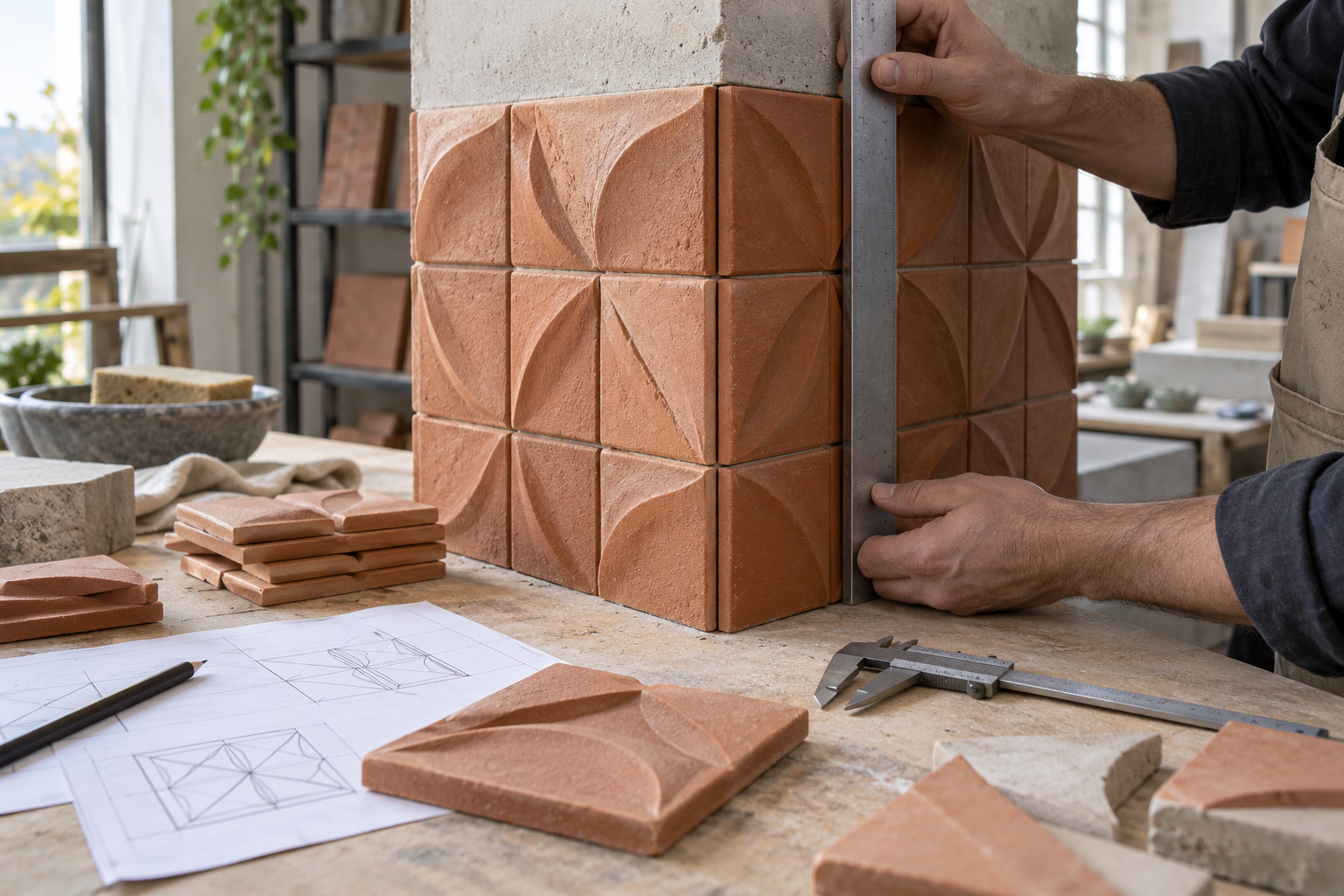
Original AI-generated concept illustration showing a corner-review scenario.
Run an Installation Trial With the Intended System
Use the specified substrate, preparation and adhesive system in the trial. Ask the installer and system supplier to confirm the method for the actual tile back, weight and application. For wet or external areas, include the project’s water management, movement joint and exposure requirements in the review.
Record handling damage, cut quality, time per module and the difficulty of maintaining alignment. Do not turn a short trial into a universal productivity guarantee. It gives the buyer an explicit basis for allowances that can be revised for site access and workmanship conditions.
A tile datasheet cannot approve the entire installed assembly. Ask the project designer to define the applicable acceptance criteria. The ISO standards organization is an editorial reference for locating standards; where the project specifies ISO 13006 or ISO 10545 requirements, request reports for the relevant classification or test method and product. This reference does not assert that MagiTiles holds ISO certification.
Keep Industrial and Architectural Product Categories Separate
An alumina ceramic tiles manufacturer may supply wear-resistant industrial linings with a different purpose from decorative architectural tiles. A shared use of the word ceramic does not make those products interchangeable. Specify application, service conditions and the required performance evidence before comparing suppliers.
Similarly, searches for a ceramic tiles manufacturer in bikaner or a ceramic tiles manufacturer in morbi identify sourcing locations, not proof of project suitability. Apply the same mockup, inspection and packing requirements to each bidder. Confirm the contracting entity, production location and scope instead of relying on a search label.
Turn the Mockup Into a Purchase Order Attachment
After approval, retain the product code, drawing revision, layout, lighting notes, corner detail, joint width and agreed visual range. Assign an owner to each open item and prevent production release while a detail that affects manufacturing remains unresolved.
The order should explain how the approved mockup becomes the production reference. Ask for retained samples and batch identification, and clarify how shade or caliber groupings will be labeled. Reserve pieces should be planned with the original order where feasible, since a later batch may not reproduce the same visual range.
Review ceramic tile project cases for comparable application contexts, then request the specific installation and supply evidence relevant to your project. A finished photograph can inspire a detail but cannot establish the tolerances or packing controls for a new order.
Compare Bids After the Same Decisions Are Closed
Before choosing a supplier, reconcile these points across the offers:
- The field module, joint width and layout use the same approved drawing.
- The corner and opening details have been built and accepted.
- The visual range has been reviewed under representative lighting.
- The installation trial uses the intended substrate and system.
- Special pieces, reserve stock and packing have separate quantities and prices.
- Production inspection refers to the approved physical sample and written criteria.
The ceramic tile sourcing insights section offers a starting point for procurement discussions. Bring the elevation, installation conditions and mockup record to that discussion so the manufacturer can respond to a concrete scope.
A useful mockup does more than confirm a preferred look. It exposes the decisions that determine labor, waste and replacement needs. Closing those decisions before the purchase order lets the project team compare a 3D ceramic tiles manufacturer on an installed-cost basis and gives the site a clear reference when production arrives.