
Before a tile container leaves the factory, project teams often review documents in separate email threads: the approved sample in one place, the inspection note in another, and the packing list close to loading time. A ceramic tiles manufacturer can make the release decision much clearer when these records are reconciled against the same purchase order and shipment.
This guide is for project contractors sourcing from a 3d ceramic tiles manufacturer, an alumina ceramic tiles manufacturer, or a brick ceramic tiles manufacturer. It focuses on evidence management before dispatch, not on replacing an independent inspection or a project-specific acceptance plan.

The Seven Records to Reconcile
- Approved sample or panel reference, including the finish, shade, format, and intended installation area.
- Purchase order and revision history, so the team knows which specifications are current.
- Batch and calibre record, matched to carton or pallet identification.
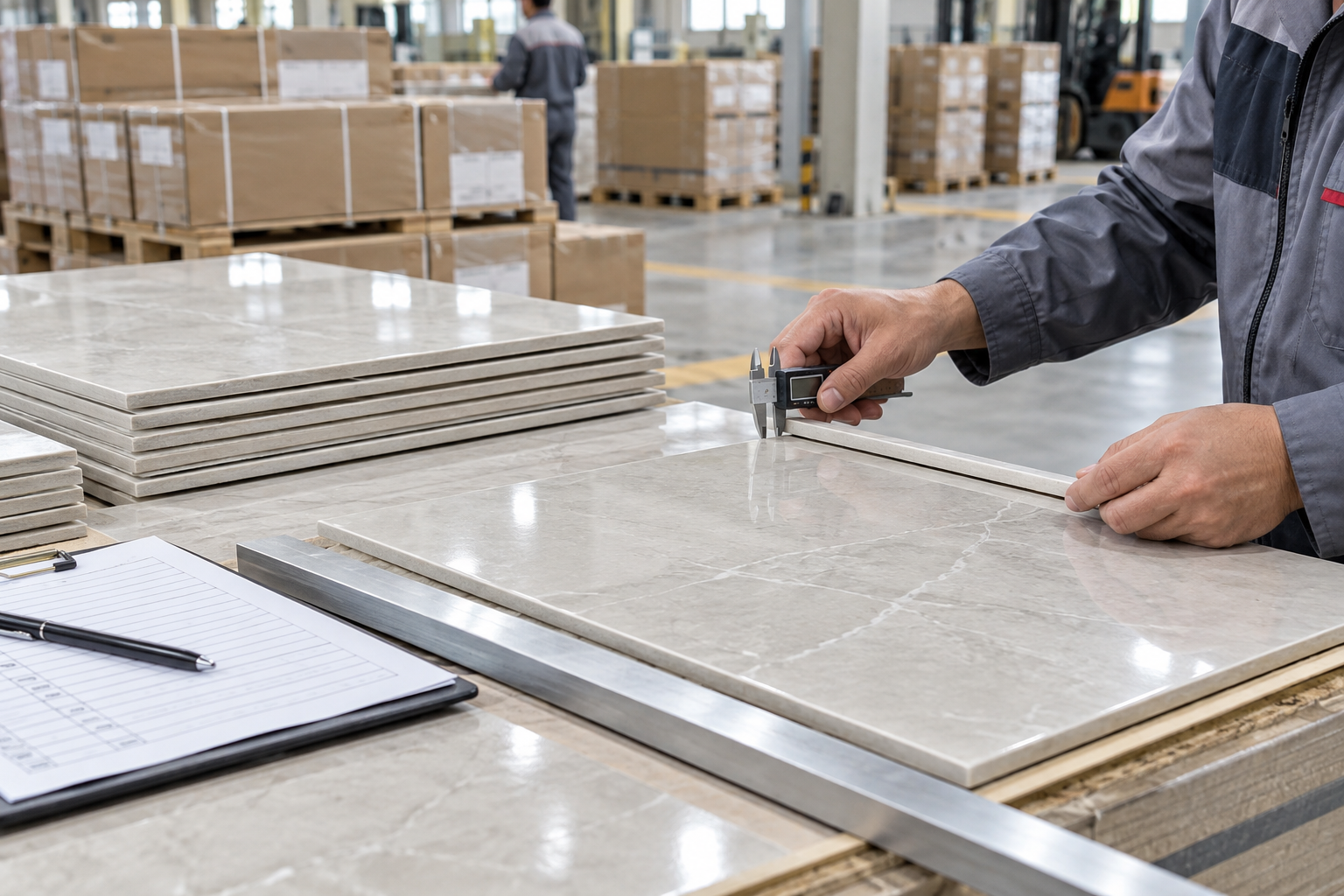
- Final inspection report, showing the lot inspected and the agreed checks.
- Packing list, carton count, pallet count, and product breakdown.
- Loading record, including container number, seal number, and shipment photos.
- Open-issue register, showing who approved exceptions and what follow-up remains.
The point is not to create paperwork for its own sake. It is to ensure that the goods being released are the goods the project approved. A buyer can review the ceramic tiles manufacturer factory process to understand where each record should originate.
Three Cross-Checks That Prevent Confusion
First, compare the approved sample description with the inspection report. If one uses a showroom nickname and the other uses a technical code, ask the supplier to map them clearly. Second, compare the packing list with pallet labels and loading photos. Third, compare the batch record with the quantity released so replacement cartons can be traced later.
For a multi-phase hospitality or retail project, discuss these checks against a relevant ceramic tile project reference. The useful question is not whether a supplier has a catalogue; it is whether the evidence can be followed when several areas are installed months apart.
Keep Standards in Their Proper Role
An ISO reference can help a procurement team discuss quality systems and test documentation, but it does not prove that a particular supplier holds a certification. Confirm the applicable method, acceptance criteria, and project requirements directly with the supplier and inspection team. Use the ISO standards reference as background rather than as a certification claim.
A Practical Release Meeting
Ask each participant to mark every record as ready, open, or not applicable. The project buyer, quality reviewer, and logistics contact should be able to explain any open item before loading begins. If a revision is still moving, hold the release decision until the current version is identified on the packing and inspection records.
For additional sourcing questions, the tile sourcing insights for project buyers page can support the review conversation.
Final Takeaway
Selecting a ceramic tiles manufacturer includes more than comparing price and surface images. A reconciled pre-shipment package connects the approved sample, production batch, inspection evidence, packing details, and loading record. That connection gives project contractors a clearer release decision and a better recovery path if a site issue appears later.