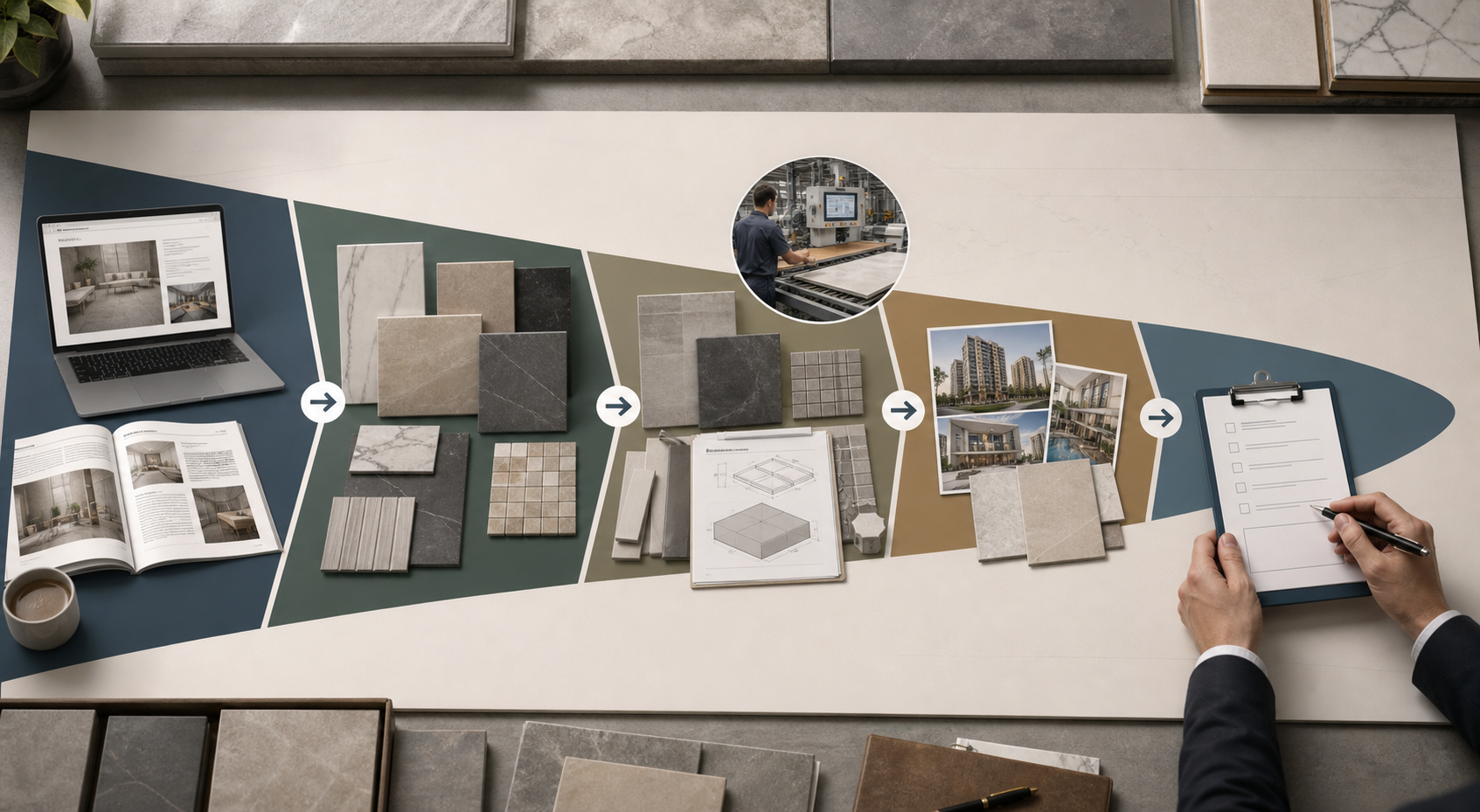

Ceramic tiles manufacturer comparison looks productive on paper. Buyers collect quotations, review finish samples, and talk with several factories, yet the sourcing decision still feels uncertain. The reason many teams still struggle is that comparison alone does not answer the harder questions about engineering specs, customization control, project references, and delivery coordination. A stronger buying path should move from blog insight to product review to OEM discussion and finally to inquiry.
Product direction must be clear before supplier comparison becomes useful
One common problem is comparing suppliers before the product path is properly defined. Buyers exploring the MagiTiles product range for ceramic tile projects should first confirm whether the application needs standard ceramic tiles, decorative wall solutions, or 3d ceramic tiles with stronger customization requirements.
Without that category decision, supplier quotations can hide scope mismatch. One ceramic tiles manufacturer may be pricing a simpler standard route while another is already building in engineering detail, packaging protection, and customization handling. The spreadsheet comparison then looks complete even though the execution scope is not aligned.
Surface appearance is not enough to compare execution strength
A polished sample board can create false confidence. What buyers really need to compare is execution discipline. Project contractors should ask:
- Which size, thickness, and relief tolerances are controlled for production.
- Which finish details are likely to vary between batches.
- Which custom elements need sample revisions or drawing approval before mass production.
- Which packaging method protects tiles during export loading and site delivery.
- Which lead-time checkpoints keep production and shipping aligned with the project schedule.
These questions reveal whether the supplier can support the job after approval, not just during quotation.
OEM and ODM discussions expose real sourcing strength
The next comparison layer should happen inside process review. Buyers can use MagiTiles OEM and ODM support for tile customization and project coordination to judge whether the supplier can convert design intent into a controlled manufacturing plan.
This matters even more when the sourcing brief includes a 3d ceramic tiles manufacturer requirement. Decorative surfaces often involve more sample coordination, mold confirmation, and packaging risk than standard tile programs. A supplier that cannot explain those steps clearly is still weak even if the sample looks attractive.
Project references and standards add practical proof
Project references help buyers understand how a ceramic tiles manufacturer handled similar hospitality, retail, facade, or residential jobs. They show whether finish targets, revisions, and delivery timing were managed in a repeatable way.
The International Organization for Standardization is also a useful external authority when teams want to anchor the conversation in process control and documented quality discipline. That keeps supplier comparison focused on reliable execution rather than presentation alone.
Move the buyer journey toward a better inquiry
The comparison process should lead somewhere practical:
- Use the blog article to understand why supplier comparison still leaves risk.
- Review the product range to confirm the correct ceramic or 3D tile category.
- Use the OEM and ODM discussion to test customization control and project-reference strength.
- Send an inquiry with quantities, finish expectations, application area, and timeline needs.
When the sourcing team is ready to move forward, they can contact MagiTiles for a ceramic tile project inquiry.
Conclusion
Buyers still struggle after comparing ceramic tiles manufacturers because comparison is only the starting point. Better sourcing decisions come from checking engineering specs, customization discipline, project references, and delivery coordination before the order is placed. The safer path begins with the right product range, continues through OEM review, and ends with a precise inquiry that supports execution.