3d ceramic tiles manufacturer sourcing gets safer when project contractors evaluate the execution path behind the sample, not just the datasheet in front of them. A ceramic tiles manufacturer may show strong dimensions and finish descriptions, yet buyers still need evidence on engineering control, project references, customization discipline, and delivery planning before the order can move into production with confidence.
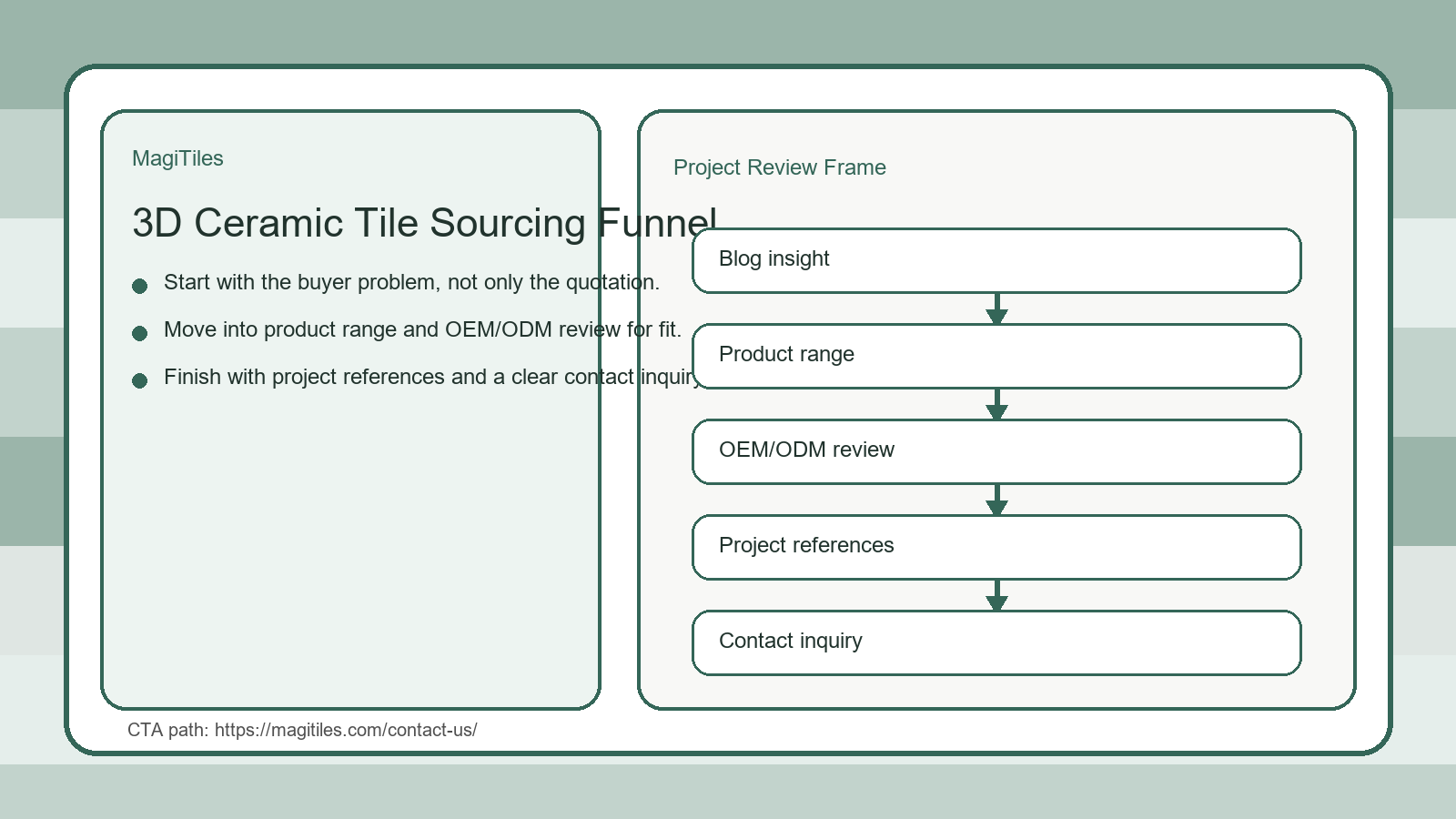
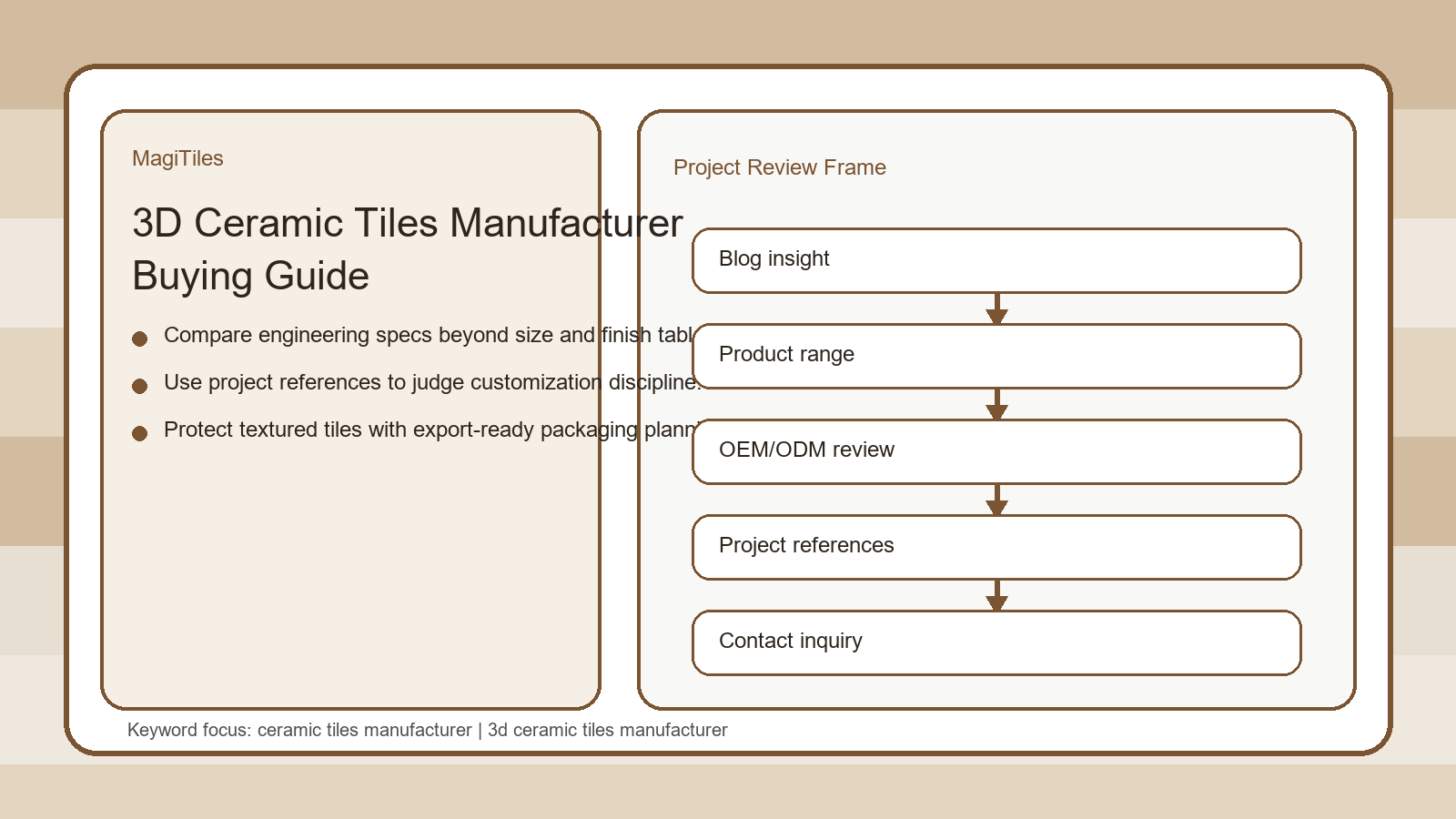
That is why this buying guide focuses on what matters beyond the datasheet. The goal is to move the reader from blog insight to product-range review, then into OEM and ODM evaluation, and finally toward a workable project inquiry.
Confirm the right tile category before comparing details
The first step is to verify what the project actually needs. Buyers should review the MagiTiles product range for ceramic tile projects and separate standard ceramic products from decorative wall programs and customized 3D surface applications.
This matters because the sourcing path changes once textured surfaces, relief depth, shaped pieces, or project-specific finishes are involved. A quotation only becomes useful when the supplier is pricing the same execution scope that the contractor expects to deliver on site.
Engineering specs should explain execution, not just dimensions
Datasheets usually list size, finish, and material basics, but project contractors should push further and ask:
- How are relief depth, tile thickness, and edge tolerances controlled in repeat production?
- Which approval steps confirm texture, finish, and color before mass production starts?
- Which packaging method protects textured or shaped tiles during export handling?
- How does the supplier coordinate production timing with shipment and installation milestones?
Those questions reveal whether the ceramic tiles manufacturer can support a real project instead of only presenting a polished sample board.
Project references prove whether customization control is practical
Project references are often more valuable than broad claims. They help buyers understand whether the supplier has delivered decorative wall tiles, branded interiors, hospitality surfaces, or other applications with similar complexity. A dependable 3d ceramic tiles manufacturer should be able to connect sample approval, packaging protection, and project communication to actual delivery experience.
That is also why buyers should review MagiTiles OEM and ODM support for tile customization and project coordination. The OEM and ODM path shows how the factory approaches drawing review, sample revision, production planning, and export preparation when the project requires more than an off-the-shelf tile offer.
Use standards-based thinking to compare suppliers more clearly
Authority references can help keep the conversation disciplined. The International Organization for Standardization is a useful benchmark when buyers want to frame supplier review around process control, documented quality thinking, and consistency.
That approach helps project contractors compare more than appearance. It shifts attention toward inspection habits, approval checkpoints, and whether the supplier can keep engineering requirements aligned from sample stage through shipment.
Keep the funnel moving toward inquiry
The intended buying path stays direct:
When the project team is ready to move forward, the next step is to contact MagiTiles for a ceramic tile project inquiry.
Conclusion
3d ceramic tiles manufacturer buying decisions improve when project contractors compare engineering specs, project references, customization control, and delivery coordination beyond the datasheet. The stronger path starts with the right product category, continues through OEM and ODM review, and ends with a detailed inquiry that gives the supplier enough information to support execution.